
Hair Loss Is More Common Than You Think, And Treatable
At Luxe Dermatology, hair loss is one of the most common concerns we evaluate — and one of the most misunderstood.
Whether you’re noticing increased shedding, gradual thinning, or visible changes in your hairline, you’re not alone. Hair loss affects both men and women and can occur at nearly any stage of life. The key is early evaluation and personalized treatment.
Under the care of Dr. Moore and her team, we take a medical-first approach to understanding the root cause — because successful treatment starts with the right diagnosis.
What’s Normal — And What’s Not?
Losing 50–100 hairs per day is normal. Hair naturally cycles through growth and shedding phases.
However, you should seek evaluation if you notice:
Sudden or excessive shedding
Thinning at the crown or widening part
A receding hairline
Patchy hair loss
Scalp itching, burning, or tenderness
These signs often point to an underlying condition that can — and should — be addressed.
Common Causes of Hair Loss
Hair loss is rarely “just genetics.” Contributing factors may include:
Genetic (Androgenetic Alopecia)
Gradual thinning in men and women.
Hormonal Changes
Postpartum shifts, menopause, thyroid imbalance, PCOS.
Stress or Illness (Telogen Effluvium)
Major life events, surgery, illness, or rapid weight changes can trigger temporary shedding.
Nutritional Deficiencies
Low iron, vitamin D, B12, or protein intake.
Inflammatory Scalp Conditions
Psoriasis, seborrheic dermatitis, or other scalp inflammation.
Medication Side Effects
A comprehensive dermatologic evaluation helps distinguish temporary shedding from progressive hair loss.
The Luxe Dermatology Approach
At Luxe Dermatology, we focus on medical accuracy, evidence-based treatments, and individualized plans.
Depending on your diagnosis, treatment may include:
Prescription topical or oral medications
Medical-grade supplementation
PRP (Platelet-Rich Plasma) therapy
Laser therapy
Treatment of underlying scalp inflammation
Hair restoration is not one-size-fits-all. It is strategic, consistent, and personalized.
What to Expect at Your Hair Loss Consultation
Your consultation is designed to be thorough and diagnostic. During your visit, you can expect:
Full hair and scalp analysis
Photography to track hair thickness and density over time
Discussion of your medical history, lifestyle, and hair concerns
In some cases, scalp biopsy and/or blood work may be recommended
A comprehensive treatment plan, which may include:
Dietary suggestions
Topical therapies
Vitamins or supplements
Sometimes injectable treatments
Our goal is to identify the cause of your hair loss and create a targeted plan that gives you the best chance for improvement.
How to Prepare for Your Consultation
To help us provide the most accurate evaluation:
Arrive with hair clean and worn loose so it can be easily examined
Be prepared for photos of your scalp and hair
Bring any recent bloodwork if available
Bring a list of current medications and supplements
Photos of your hair from the past can be helpful to establish a baseline
What to Expect from Treatment
Hair growth takes time. Most patients see meaningful improvement after several months of consistent treatment. Our goals are to:
Slow or halt progression
Preserve existing density
Stimulate regrowth where possible
Early intervention significantly improves outcomes.
When You’re Ready for Answers
Hair loss can feel frustrating — even isolating. But with the right medical guidance, clarity is possible.
If you’re noticing changes in your hair, schedule a consultation at our office. A thorough evaluation can provide a clear path forward and restore more than just hair.
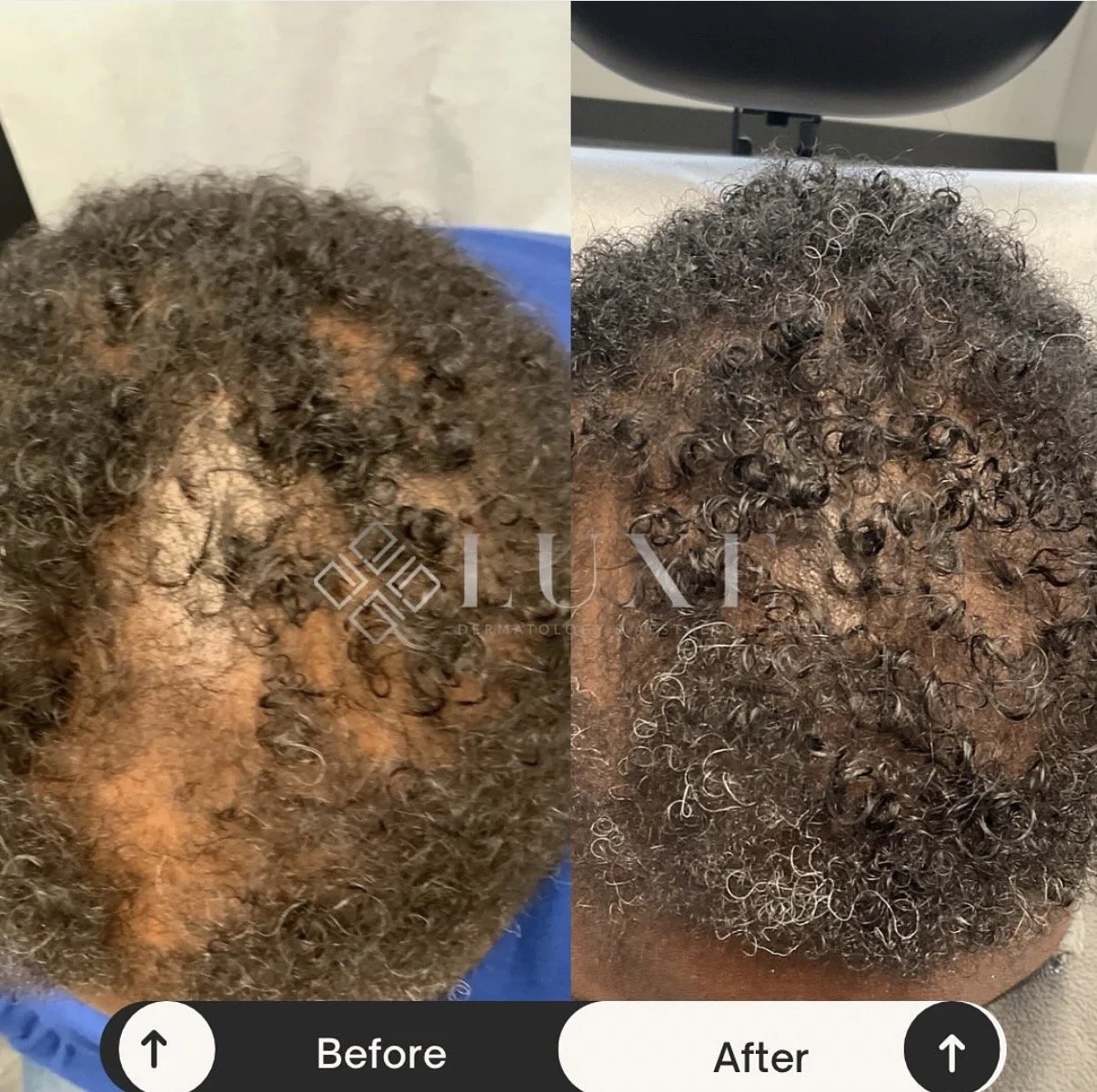
Before and after hair loss treatment at Luxe Dermatology & Aesthetic Center